From Paper Registers to Real-Time Care: How Purna Clinic Digitised Community Health in the Dang
Last updated on: May 05, 2026 by Nupoor Khandelwal
In the hills of the Dang, one of Gujarat's most remote districts, Purna Clinic is rethinking how community health can be delivered — and managed — at scale.
In just nine months:
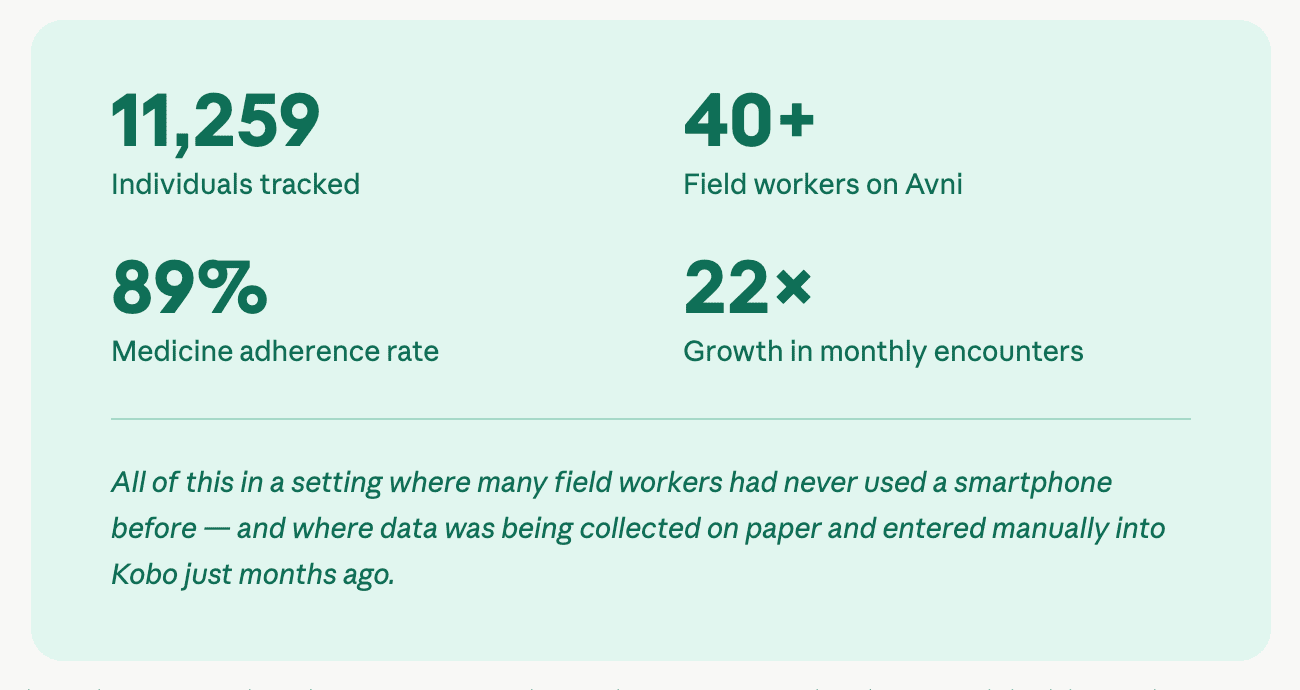
All in a setting where many field workers had never used a smartphone before.
About the Programme
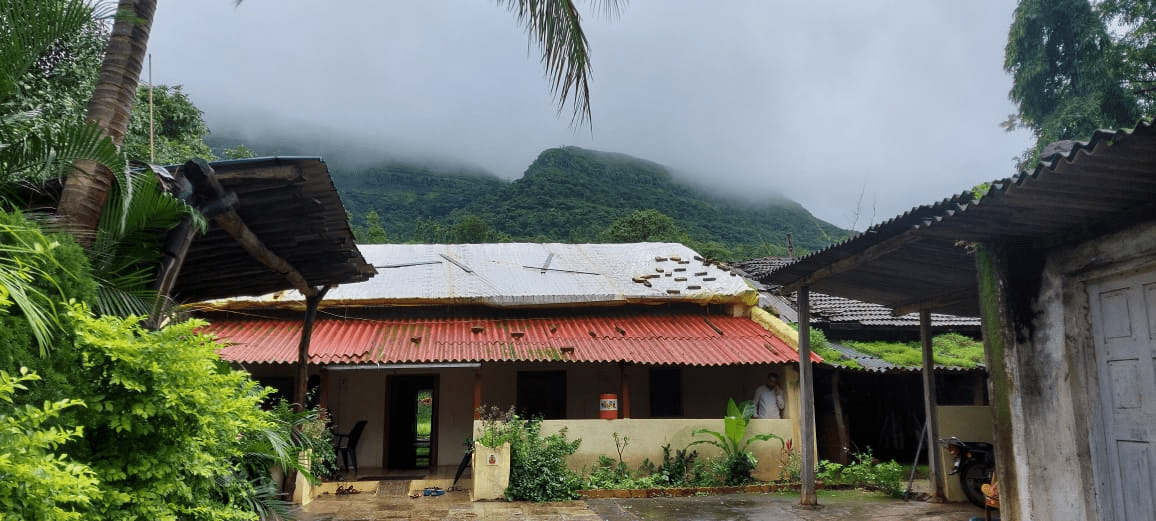
Dang is one of the most remote districts in Gujarat, at the Gujarat–Maharashtra border, with a 95% tribal population. In Morzira village, Purna Clinic — run by TIDE Trust — provides primary care to Bheel, Konkani, Kunbhi, and Gamit tribal communities across both states. The clinic sees 40–50 patients daily for everything from family medicine and physiotherapy to dental care and lab services, all at subsidised rates. Many of those patients are managing chronic conditions like hypertension and diabetes with limited access to district hospitals or government health schemes.
Delivering consistent care across a geographically dispersed tribal population has always been challenging — and before Avni, tracking that care meant paper registers in the field and manual re-entry into Kobo at the desk, with no real-time visibility into follow-ups or how the programme was performing overall.
The Challenge: Managing Care Without Visibility
Before Avni, all field data at Purna Clinic was collected manually. Field workers maintained paper registers and then re-entered everything into Kobo — every record touched twice, with no structured way to track patients over time, monitor follow-ups across villages, or aggregate data for programme decisions.
As the programme grew, this created real constraints — follow-ups were difficult to track consistently, data remained fragmented, and analysis was slow and time-consuming.
There was another layer to the challenge. Most of Purna's field workers had never used a smartphone before. Moving to any digital system meant a learning curve on top of already demanding fieldwork — in villages spread across two states, often with limited connectivity.
The Shift: Going Live with Avni
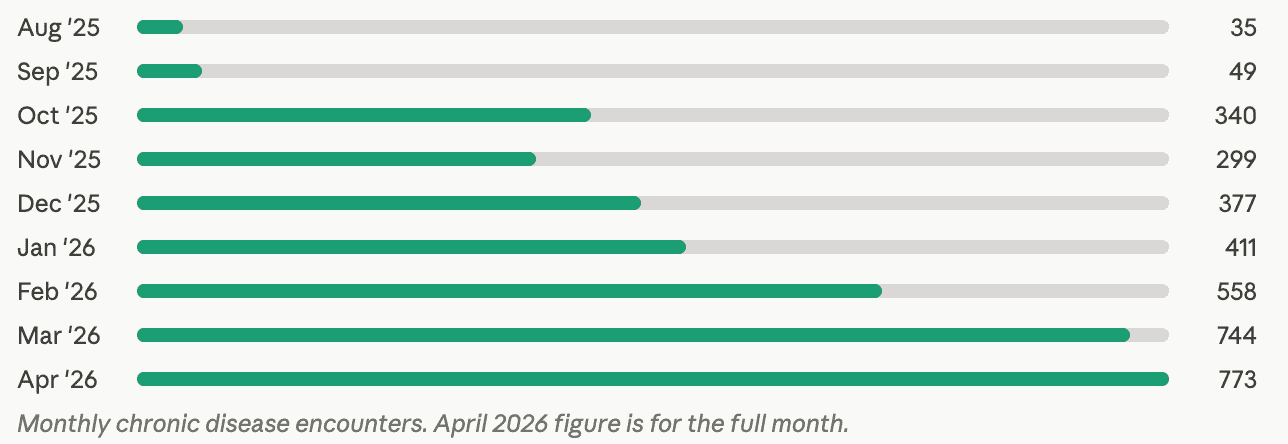
The programme went live on Avni on 4 August 2025. The first two months were slow — 35 encounters in August, 49 in September — as the team got trained and the field workers found their footing with the app. Then in October, something shifted. Encounters jumped to 340 in a single month as the field staff hit their stride and data collection scaled rapidly. Growth has continued every month since.
What Changed: From Data Collection to Real-Time Action
With Avni in place, Purna Clinic moved beyond just replacing paper. Using Avni's real-time dashboards, the programme team can now:
- See pending follow-ups across patients and villages
- Track surveys completed by each field worker
- Quickly identify which communities need more attention
All without any manual aggregation. What was a two-step process — paper in the field, Kobo at the desk — is now a single workflow.
The chronic disease programme captures not just clinical data but household-level context, including government scheme access and document status. Of the 2,792 enrolled patients, hypertension is the most common condition, followed by diabetes, COPD, mental health conditions, and stroke.
Adoption in the Field: From First-Time Users to Confident Operators
One of the most notable outcomes has been the adoption among field workers. Many started with no prior experience using smartphones. Today, they are not only using Avni for data collection but also exploring ways to access and use data directly on their devices.
This shift — from hesitation to ownership — has been critical to sustaining the programme at scale.
— Ms. Simran Jhaa, Public Health Executive, Purna Clinic / TIDE Trust
A Foundation for Scalable Community Health
For Purna Clinic, digitisation was not just about replacing paper. It enabled continuity of care across a dispersed population, visibility into programme performance, and the ability to scale operations without losing control. In a setting with limited infrastructure and first-time technology users, the programme demonstrates what's possible when the right systems are in place.
Explore What This Could Look Like for Your Programme
If you're working on community health programmes and facing challenges with tracking, follow-ups, or scale, Purna Clinic's journey offers a practical example of what's possible. Learn how Avni can support your team in building a more connected, data-driven approach to care.
📬 Reach out to us at avnipartnerships@samanvayfoundation.org
📰 Subscribe to our newsletter for more case studies and implementation stories.